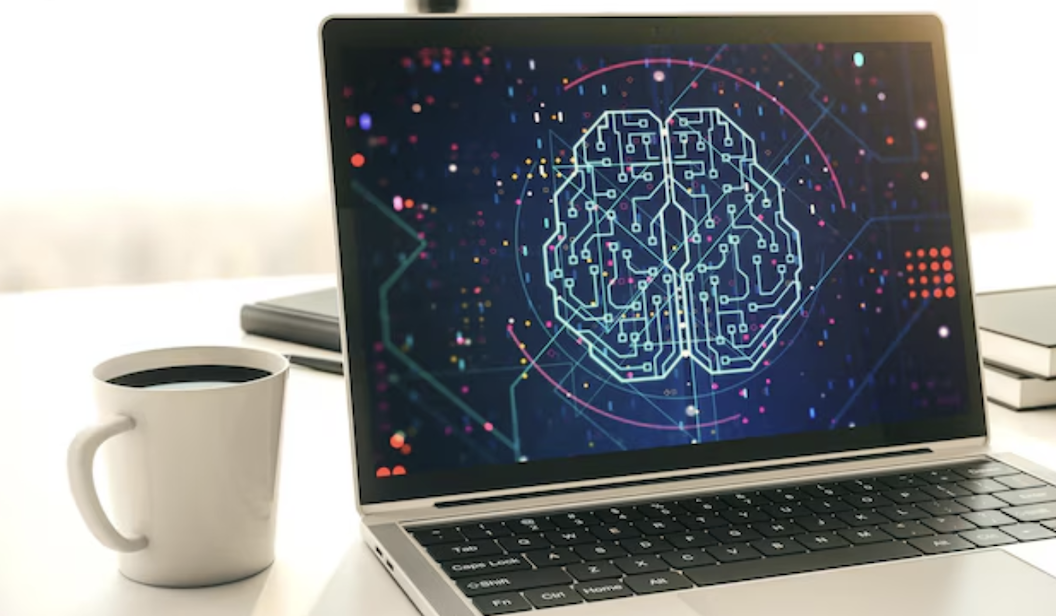
Artificial Intelligence (AI) imitates human thinking by enabling machines to learn, reason, and make decisions in ways that resemble how people use their brains. This technology has already become part of everyday reality. It is already shaping daily life, industries, and future innovation. From smart assistants to medical diagnosis, AI continues to transform how humans interact with technology.
This article explains how Artificial Intelligence imitates human thinking, why it matters, and where it is heading next. The content is written with clarity, accuracy, and SEO best practices to ensure strong Yoast SEO and readability scores.
Understanding Artificial Intelligence and Human Thinking
Human thinking involves learning from experience, recognizing patterns, solving problems, and making decisions. Artificial Intelligence aims to replicate these abilities using algorithms, data, and computational models.
Unlike traditional software, AI systems do not rely only on fixed instructions. Instead, they adapt and improve over time. This ability allows AI to behave in ways that feel intelligent and human like.
As a result, Artificial Intelligence imitates human thinking by combining logic, memory, perception, and learning.
How Artificial Intelligence Learns Like Humans
Learning is a core part of human intelligence. AI imitates this process through machine learning. In this approach, systems analyze large amounts of data and identify patterns without being explicitly programmed for every task.
For example, humans learn to recognize faces by observing features repeatedly. Similarly, AI learns face recognition by analyzing thousands of images. Over time, accuracy improves.
Moreover, deep learning takes this process further by using neural networks inspired by the human brain. These networks process information in layers, just as humans do when understanding complex ideas.
Reasoning and Decision Making in AI Systems
Humans use reasoning to evaluate options and choose actions. Artificial Intelligence imitates human thinking by applying logical models and probability based reasoning.
AI systems can compare outcomes, predict results, and select the most effective solution. In healthcare, AI helps doctors by suggesting diagnoses based on symptoms and medical history. In finance, it assists with risk analysis and fraud detection.
Therefore, AI does not replace human reasoning. Instead, it enhances decision making with speed and precision.
Natural Language Processing: Teaching AI to Communicate
Language is one of the strongest signs of human intelligence. Artificial Intelligence imitates human thinking through Natural Language Processing (NLP). This technology enables machines to process, analyze, and produce human language effectively.
Chatbots, voice assistants, and translation tools use NLP to communicate naturally. They analyze grammar, context, and intent to respond accurately.
Because of this, interactions with AI feel more human than ever before.
Perception and Recognition Capabilities
Humans rely on their senses to understand the world. AI imitates this ability using computer vision and audio recognition.
Computer vision enables AI systems to analyze and understand visual data from images and videos.It is widely used in security systems, autonomous vehicles, and medical imaging. Audio recognition helps AI understand speech, tone, and even emotion.
As technology advances, AI perception becomes more refined and reliable.
Emotional Intelligence and AI Limitations
While Artificial Intelligence imitates human thinking in many ways, it does not truly feel emotions. AI can recognize emotional cues, such as facial expressions or voice tone, but it does not experience feelings.
This limitation is important. Human judgment, creativity, and empathy remain irreplaceable. AI delivers the greatest value when it enhances human capabilities rather than taking their place.
Understanding this balance ensures ethical and responsible AI development.
Real World Applications of Human Like AI
Artificial Intelligence is already influencing multiple industries:
- Healthcare: AI supports clinicians by improving diagnostics, treatment decisions, and patient care monitoring.
- Education: Personalized learning systems adapt to student needs.
- Business: AI improves customer service, marketing analysis, and supply chain efficiency.
- Transportation: Autonomous systems enhance safety and navigation.
In each case, Artificial Intelligence imitates human thinking to solve problems efficiently.
The Future of Artificial Intelligence and Human Thinking
The future of AI focuses on collaboration rather than competition. Researchers aim to build systems that understand context better, learn faster, and operate more ethically.
As data quality improves and computing power increases, AI will continue to mirror human cognitive processes more closely. However, human oversight will always remain essential.
This partnership between humans and intelligent machines promises innovation, productivity, and sustainable growth.
Conclusion
Artificial Intelligence imitates human thinking by learning, reasoning, communicating, and recognizing patterns in ways inspired by the human brain. While AI is not truly conscious, its ability to replicate cognitive processes has already reshaped modern life.
By understanding how AI works and where it fits best, individuals and organizations can use it responsibly and effectively. The future belongs to human intelligence enhanced by artificial intelligence, not replaced by it.